
a homeowner's field guide
How to Hire a Licensed Electrician in Ontario
An Ottawa-area homeowner checklist for verifying licensed electrical contractors, comparing written estimates and understanding ESA notifications and acceptance documents.
8 min readEditorially reviewed
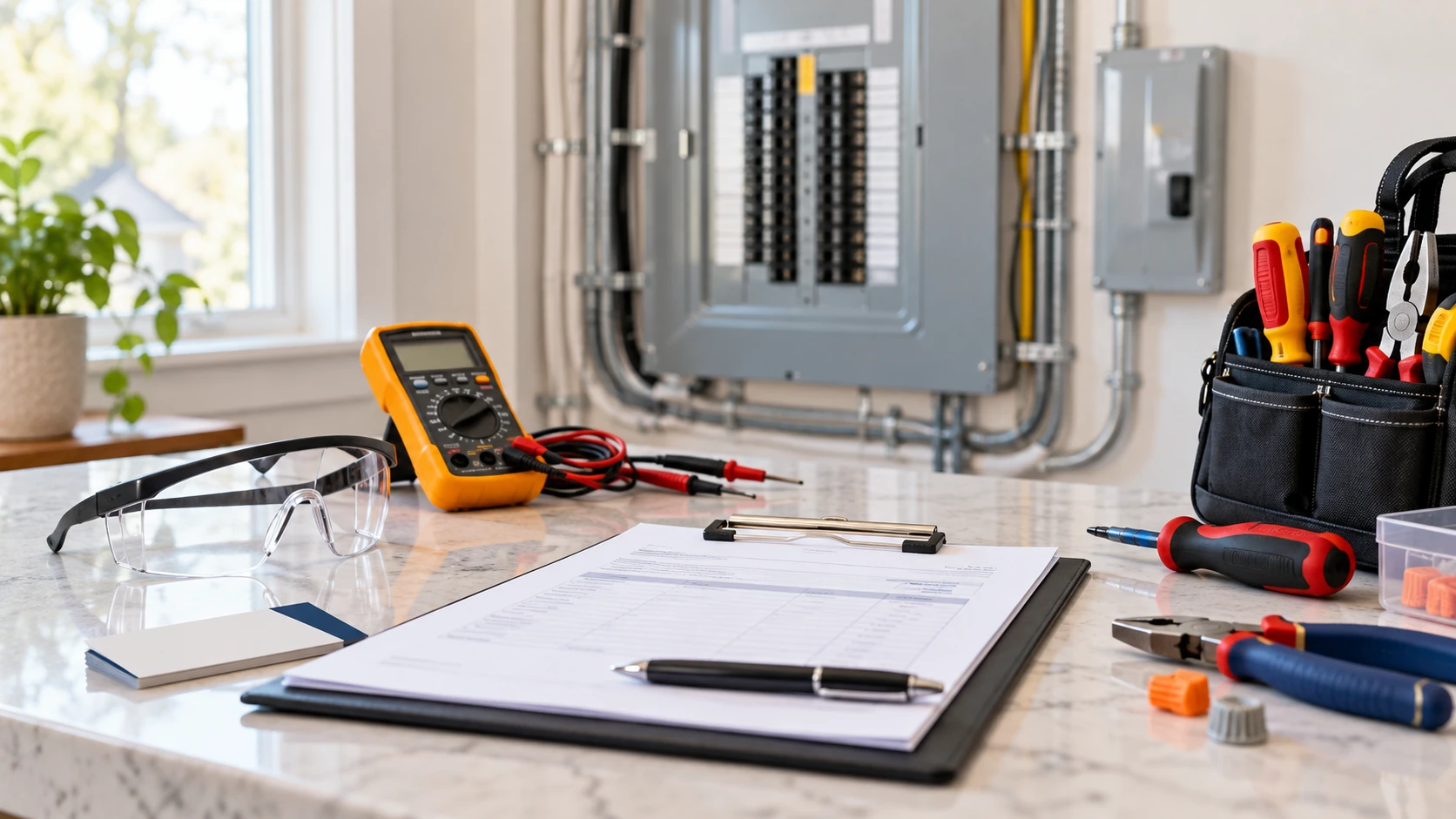
Hiring an electrician for your Ottawa-area home should start with a licence check—not a price quote. Whether you're adding a circuit in Kanata, planning an EV charger in Orléans or updating an older home near Carleton Place, Ontario has a specific licensing system for electrical businesses. This guide explains how to verify a contractor, compare proposals and keep the right electrical-work records.
The short version: Hire a business with an active Electrical Contractor Registration Agency/Electrical Safety Authority (ECRA/ESA) licence; verify it through the official ESA locator; get a written estimate that covers the electrical notification; and ask for the ESA Certificate of Acceptance when the job is complete.
1. Know who is legally allowed to take the job
In Ontario, a business hired to do electrical installation or repair work in a home must generally be a Licensed Electrical Contractor (LEC). The business holds an ECRA/ESA electrical contractor licence. Being a skilled or certified electrician, or holding a Master Electrician licence, is not by itself permission to independently offer electrical contracting services to the public. Individuals with those qualifications may carry out appropriate work through a properly licensed electrical contracting business.
This distinction is easy to miss when a referral says only that someone is "a licensed electrician." Ask which business will contract with you, and verify that business's ECRA/ESA licence—not just an individual's trade qualification. The ESA explains the distinction on its hire a licensed electrical contractor page.
| What you're checking | What it tells you | Is it enough to hire the business? |
|---|---|---|
| ECRA/ESA electrical contractor licence | The business is licensed by ESA to offer electrical contracting in Ontario | This is the essential business-level licence check |
| Electrician trade certification | The individual has a recognized trade qualification | No, not by itself |
| Master Electrician licence | An individual is licensed for designated master-electrician responsibilities | No, not by itself |
| Online reviews or neighbour referrals | Information about experiences with the business | Useful, but not a substitute for licensing |
2. Check the business in ESA's official directory
Before accepting a quote, ask for the company's seven-digit ECRA/ESA licence number and exact legal or operating business name. Compare that information with the official ESA Contractor Locator.
A practical process:
- Ask the company for its ECRA/ESA licence number before booking work.
- Open the ESA Contractor Locator and search by the contractor's name or your location.
- Confirm that the business shown is the one providing your quote. If a similar name appears, clarify it directly rather than guessing.
- Verify that the business is willing to provide its licence number on the written estimate.
- If you cannot locate the business or have doubts about licence status, contact ESA before proceeding.
ESA advises consumers to look for the number on a contractor's vehicle, business card and estimate. A polished website, a social-media recommendation or a confident sales pitch is not equivalent to a valid licence.
3. Describe your project before asking for estimates
A useful estimate starts with an accurate description of the work. Be ready to tell contractors:
- The home's approximate age and whether the wiring or electrical panel is known to have been modified.
- Whether the job is a repair, replacement, new circuit, panel/service upgrade, EV charging installation or another project.
- Whether you have photographs of the relevant electrical panel or installation area that you can safely take without opening electrical equipment.
- Whether you are coordinating the work with a larger renovation, a general contractor or a utility company.
- Whether access, travel or scheduling could be different for a rural property outside Ottawa.
Don't diagnose electrical hazards yourself or open energized equipment to obtain a photograph. If you notice sparking, burning smells or other potentially dangerous electrical symptoms, treat the situation as a safety concern and contact an appropriately qualified professional; follow emergency-service advice if there is immediate danger.
For Ottawa-area residents, location matters in practical ways: confirm that the company serves your specific community and whether travel, emergency response and return visits are included in the estimate. A contractor advertising "Ottawa" may not necessarily quote identical terms for Kanata, Manotick, Carp or Carleton Place.
4. Compare written estimates on the same basis
The Government of Ontario recommends obtaining at least three written estimates for home renovations and checking references. For electrical work, the province also recommends including the ECRA/ESA licence number and ESA notification fees on the estimate. See Ontario's home renovation consumer guidance.
Don't compare only the totals. Use the checklist below when reviewing each proposal.
| Item to compare | What to ask the contractor |
|---|---|
| Business identity and licence | What company is contracting with me, and what is its ECRA/ESA number? |
| Scope | Exactly what equipment, wiring, repairs and testing are included? |
| Materials | What products or materials are proposed, and are substitutions allowed? |
| ESA notification | Who files it, and is the fee included in the quote? |
| Other coordination | Does the work require utility coordination or a separate municipal building permit? |
| Schedule and access | When could work begin, and is a return visit anticipated? |
| Changes | How will unexpected conditions or added work be priced and authorized? |
| Completion documents | Will I receive the ESA Certificate of Acceptance and final invoice? |
| Warranty and follow-up | What workmanship or product warranty applies, and who handles callbacks? |
A quote should make it possible to distinguish a genuine difference in scope from a difference in price. For example, two panel-upgrade estimates may not cover the same utility coordination, site modifications or finishing work. Avoid publishing a "typical Ottawa price" unless it has been researched from current, relevant data.
5. Understand ESA notifications, inspections and completion records
In Ontario, almost all electrical work requires an electrical notification of work filed with ESA before work begins. People often call this an electrical permit. If you hire an LEC, the contractor files the notification for the work they perform. ESA also explains that an electrical notification is not the same as a municipal building permit; some projects need both. Read ESA's notifications and inspections guidance.
Ask the contractor these questions before work starts:
- Will this project require an ESA notification, and will your company file it?
- Are ESA fees included in the written estimate?
- At what stage must the installation be available for ESA review before it is concealed?
- Who requests the applicable inspection or review?
- How will I receive the Certificate of Acceptance after completion?
ESA's review depends on the installation and its assessed risk; not every notified job necessarily receives an in-person inspection. A complicated project may require review at multiple stages. Don't allow wiring that needs review to be concealed prematurely.
When the work has been reviewed and accepted, ESA issues a Certificate of Acceptance to the notification holder. If the contractor filed the notification, request a copy for your property records. It can be relevant to insurance questions and future resale. ESA explains the document on its Certificate of Acceptance page.
6. Watch for warning signs
Treat the following as reasons to stop and investigate, rather than proof that a particular contractor has committed an offence:
- The business refuses to provide an ECRA/ESA licence number or you cannot verify its identity.
- Someone asks you to file the ESA notification in your own name for work that they will perform as a paid contractor.
- An estimate omits meaningful information about the work or makes it hard to identify who is responsible.
- You are pressured to pay a large amount immediately or to proceed without a written agreement.
- A cash-only discount is offered without a proper receipt.
- A general contractor says they can perform the electrical portion themselves but cannot identify an electrical contracting business licensed to do it.
These concerns reflect ESA's consumer advice and Ontario's general home-renovation guidance. If you suspect unlicensed electrical contracting, ESA provides a reporting route through its consumer protection information.
7. What if you're working with a general contractor?
If a kitchen renovation, basement finishing or addition involves electrical work, ask the general contractor for the name and ECRA/ESA licence number of the electrical subcontractor before work starts. Verify that company independently. Confirm who will submit the ESA notification, coordinate required inspections and supply the acceptance document.
A single renovation agreement can cover many trades, but the electrical work still needs to be carried out through the appropriately licensed business. Keep the electrical subcontractor details with your main renovation contract and project records.
8. Can a homeowner do their own electrical work?
Ontario provides a limited owner/occupant do-it-yourself pathway for work in their own home. That is different from hiring an unlicensed person or asking a friend to do electrical work for you. DIY electrical work still has Ontario Electrical Safety Code and notification requirements, although narrow exemptions may apply to some activities. ESA advises homeowners to review current requirements and to file notifications where required. See its DIY electrical work guidance.
Electrical work can be hazardous even when the project seems small. Hiring an LEC remains the prudent option for homeowners who don't have the training and knowledge to perform the work safely.
9. Save this homeowner hiring checklist
Before signing:
- Confirm the exact business name and verify the ECRA/ESA licence in the official directory.
- Give each company the same project description so estimates are comparable.
- Obtain a detailed written estimate, including ESA notification arrangements and fees.
- Ask about relevant experience with your project, references, scheduling and warranties.
- Clarify any utility or building-permit coordination.
- Include any agreed changes in writing.
After the work:
- Keep the final invoice and the approved scope or change orders.
- Request and save the ESA Certificate of Acceptance when applicable.
- Retain product documentation and warranty information.
- Record the contractor's contact details for future service.
Start with an official licence check: Find or verify a Licensed Electrical Contractor through ESA.
Editorial note: This homeowner guide provides general information, not electrical design, installation or legal advice. Rules and project requirements can change. Verify current requirements with ESA and the contractor responsible for your work before starting a project.
you asked
Common questions
How do I check whether an electrician is licensed in Ontario?
Ask for the business’s ECRA/ESA electrical contractor licence number and verify the business through ESA’s official Contractor Locator. An individual trade certificate alone is not the electrical contracting business licence.
Can I hire someone who says they are a Master Electrician?
A Master Electrician licence alone does not authorize someone to independently offer electrical contracting services. For hired residential electrical work, verify the Licensed Electrical Contracting business through which the work will be performed.
Who files the ESA electrical notification?
When a Licensed Electrical Contractor performs the work, that contractor files the applicable notification. Almost all electrical work requires a notification, with some exceptions. Confirm the requirements for your project with ESA.
Does every electrical job receive an ESA inspection?
Not necessarily. ESA’s review process depends on the work and assessed safety risk. ESA may determine that an on-site inspection is unnecessary in some cases. The notification and acceptance process still matters.
Is an ESA notification the same as a City of Ottawa building permit?
No. The ESA electrical notification and a municipal building permit are different processes. Depending on the project, both may be needed.
What document should I request after electrical work is completed?
Ask for the ESA Certificate of Acceptance when the work has been reviewed and accepted. Keep it with your property records, invoice and project paperwork.
Can my general contractor arrange the electrical work?
Yes, but verify that the electrical portion will be performed by a Licensed Electrical Contracting business and confirm who is responsible for ESA notifications and final documents.
Sources
- Hire a Licensed Electrical Contractor — Electrical Safety Authority
- Contractor Locator Tool — Electrical Safety Authority
- Notifications and Inspections: What You Need to Know — Electrical Safety Authority
- ESA Certificate of Acceptance — Electrical Safety Authority
- Do-It-Yourself (DIY) Electrical Work — Electrical Safety Authority
- Your Rights When Starting Home Renovations or Repairs — Government of Ontario
keep exploring
Related reading

Service category
Electricians in Ottawa: Hiring, Permits and Common Projects
An Ottawa-area starting point for hiring a Licensed Electrical Contractor, understanding common household projects and finding trustworthy ESA and utility guidance.

Homeowner guide
Home EV Charger Installation in Ottawa (2026): Costs, Capacity and ESA Requirements
An Ottawa homeowner guide to safe Level 2 charging, electrical capacity, ESA notifications, utility questions and contractor quotes.
Homeowner guide
100-Amp vs. 200-Amp Electrical Service in Ottawa (2026): Upgrade Costs and Checklist
A practical Ottawa-area guide to evaluating home electrical capacity, planning a 100A-to-200A service upgrade, coordinating utilities and comparing contractor quotes.
Homeowner guide
Home Standby Generator Installation in Ottawa (2026): Costs, Rules and Checklist
An Ottawa-area homeowner guide to generator sizing, installation costs, transfer switches, ESA notifications, gas or propane work, City rules and contractor questions.