
a homeowner's field guide
Asphalt vs. Metal Roofing in Ottawa: Cost, Snow and Lifespan
An Ottawa homeowner comparison of asphalt and metal roofing based on real installation scope, winter risks, maintenance and long-term value.
9 min readEditorially reviewed
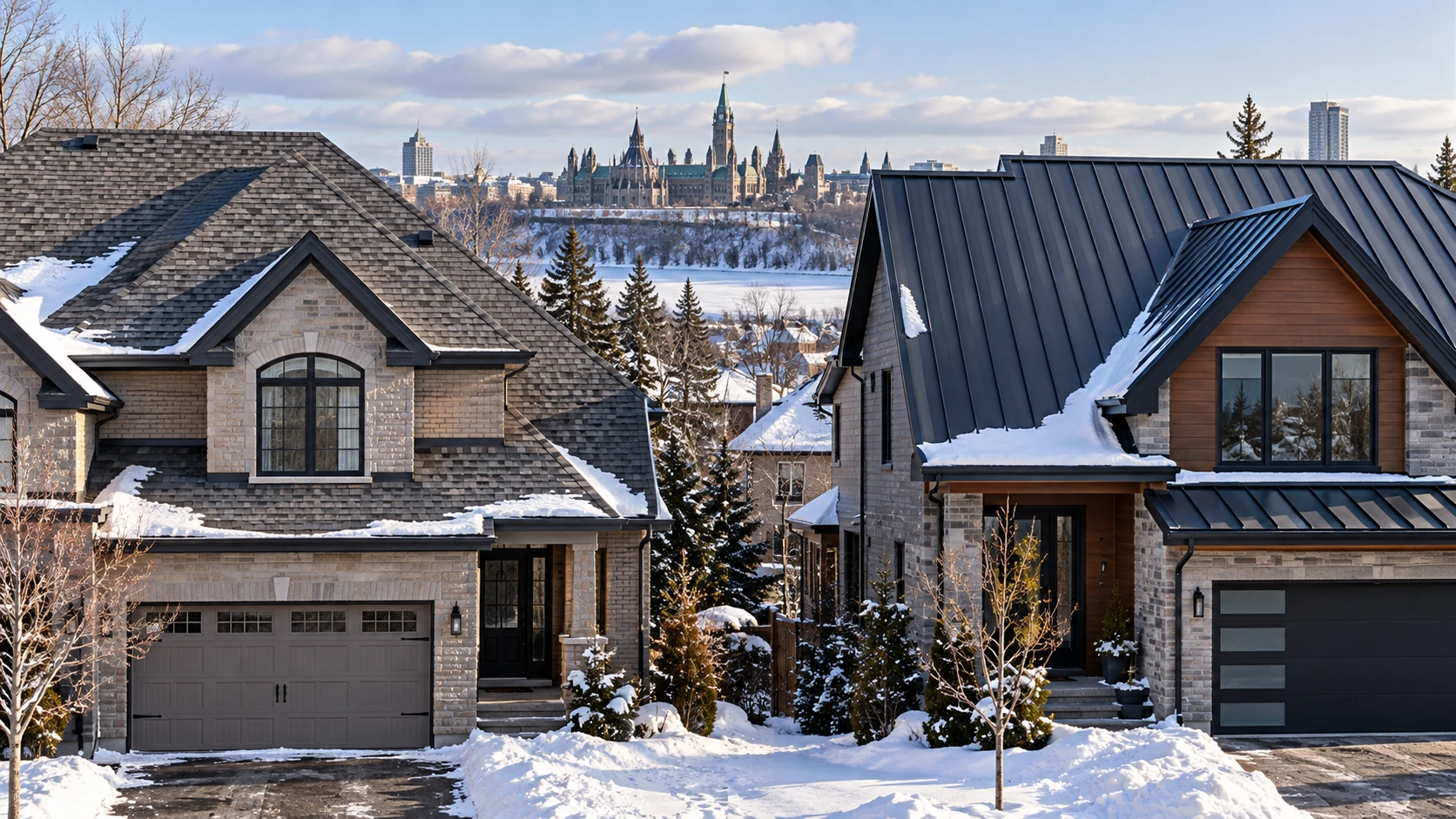
Asphalt shingles and metal roofing can both be reasonable choices for an Ottawa-area home. The choice is not just about which material 'lasts longer': homeowners need to compare the entire installed roof system, how snow and ice are managed, upfront budget, expected maintenance, roof complexity and the years they plan to own the property. A poorly detailed metal roof may leak; a properly installed asphalt roof can perform well without carrying the cost of a major material change.
The short version: Asphalt roofing usually wins on lower upfront installed cost and familiarity, while many metal systems are marketed for a longer service life and require a different flashing and fastening approach. Actual life and cost depend heavily on the product, roof design, installation and maintenance. Don't choose a material solely because someone promises it will 'eliminate ice dams' or never need repair.
Scope and date: Reviewed October 16, 2026. This is a homeowner decision guide for Ottawa and surrounding Eastern Ontario communities. It does not publish an invented 2026 Ottawa-wide price or guaranteed number of service-life years. Have contractors document the actual products and their warranty assumptions.
1. Asphalt versus metal roofing at a glance
| Question | Asphalt shingles | Metal roofing |
|---|---|---|
| Usual initial investment | Often lower | Often higher; varies greatly by profile |
| Product range | Standard architectural and other asphalt shingle grades | Exposed-fastener panels, standing seam, metal shingles and others |
| Main installation concerns | Underlayment, nailing, ventilation, flashing and roof slope | Underlayment, thermal movement, fastening, penetrations, snow shedding and detailing |
| Repair approach | Localized shingles or flashing work may be practical | Specific panel/profile and installer methods matter |
| Snow behaviour | Snow often stays until it melts or slides | Some smooth surfaces may shed snow in large sheets; design snow management carefully |
| Ice-dam protection | Requires attic and eave-system attention | Also requires attic and eave-system attention |
| Useful comparison metric | Installed cost and documented warranty | Installed cost and documented warranty, plus future repair expectations |
Not all metal roofs are the same product. A standing-seam assembly is not interchangeable with a low-cost exposed-fastener panel, and warranty claims depend on coating, substrate, installer and workmanship. Similarly, comparing an economy shingle quote to a premium metal system is not an apples-to-apples lifetime comparison.
2. Which roof works better with Ottawa snow and freezing rain?
Eastern Ontario roofs experience cycles of snow accumulation, melting, freezing rain, wind and spring thaw. Both materials need a correctly detailed roof assembly that matches the actual roof pitch and home geometry. Neither material automatically increases the structural snow-load capacity of an existing roof.
Metal roofing may release snow in larger or more sudden slides depending on its texture, temperature and slope. This can be helpful in some settings and dangerous above entrances, walkways, decks, driveways or fragile landscaping. Discuss snow guards or snow-retention systems where needed, along with the manufacturer's design requirements.
Asphalt shingles have a different surface texture and snow behaviour. Their granular surface can deteriorate, especially as products age or when walked on unnecessarily. Homeowners should compare manufacturer-rated wind resistance and any installation conditions rather than trusting a blanket statement that one material is 'storm-proof.'
3. Will a metal roof stop ice dams?
Not reliably by itself. Ice dams usually occur when attic heat leaks warm upper roof areas, snow melts and water refreezes near colder eaves. A smooth metal surface can change how snow leaves the roof, but it does not eliminate the heat-leakage mechanism or guarantee no icing at penetrations, gutters and edges.
Natural Resources Canada's roofs-and-attics guide emphasizes air sealing and attic insulation as central solutions. It also explains that eave membranes reduce leakage risks but do not stop the formation of ice dams by themselves.
| Ice-dam concern | Why the roof covering alone may not fix it |
|---|---|
| Warm attic melts snow | Air leakage and insulation may require separate work |
| Refreezing at cold eaves | Roof temperature pattern, weather and drainage still matter |
| Leaks at a valley or skylight | Flashing and waterproofing details control water entry |
| Thick snow above an entrance | Metal snow-slide hazards may require retention measures |
| Icicles and blocked eavestrough | Roof drainage and safe maintenance still matter |
Ask the roofing contractor whether an attic inspection or energy specialist assessment is needed. Replacing a leaky roof without addressing the underlying attic problem can leave the same winter symptoms.
4. How long does asphalt or metal roofing really last?
You'll see dramatically different lifespan numbers in advertising. They are often based on particular premium products, ideal installations, laboratory ratings or marketing claims—not a verified lifespan for your Ottawa address.
A more honest comparison considers manufacturer material warranty, installer workmanship warranty, maintenance duties, exclusions, expected repairability and whether the covering is compatible with your roof slope. A manufacturer's 'limited lifetime' description is not an unconditional promise of that roof lasting your entire life.
| Question to ask | What a useful answer includes |
|---|---|
| What exact product is proposed? | Manufacturer, product line, profile, coating and finish |
| What is warranted? | Materials, labour, blow-off or other defined issues and time limits |
| Is the warranty transferable? | Current written transfer process and limitations |
| What is excluded? | Improper ventilation, altered roof structure, extreme weather or maintenance omissions |
| How will a leak be handled? | Installer contact, response time, inspection and repair scope |
| Are replacement parts available? | Matching shingle/panel, colour and flashing availability |
Request the warranty documents before making a decision and ask for examples of similar installed roofs with several winters of service.
5. Installed cost: why online per-square-foot averages mislead
There is no City of Ottawa official price table for residential asphalt and metal reroofing. The final cost changes with slope, roof height, valleys, chimneys, skylights, old layers, decking condition, ventilation fixes, access, waste disposal and material selection. A metal system with custom trim and snow-retention components is not comparable to a basic exposed-fastener quote.
A responsible comparison asks for the total installed cost for the same roof footprint, tear-off and needed underlying repairs, not only a material price. If contractors estimate area differently, have them explain waste and measurement assumptions.
Local advertised examples, not a market average: A 2026 Ottawa roofing contractor price guide lists approximately $6,500–$12,000 for typical architectural-asphalt reroofing and $15,000–$30,000 for metal projects, while a separate Ottawa renovation publication cites roughly $8,000–$18,000 for shingle projects and says metal often costs more. The differing ranges demonstrate why these are illustrative publisher estimates, not independent verified averages; they can exclude important work on a complex roof. Ask for measurements and a detailed, written on-site quote.
| Quote item | Why it matters for a fair comparison |
|---|---|
| Actual roof surface area | Not the same as house floor area; slope and dormers add area |
| Tear-off and disposal | Layers, bin access, debris protection and removal |
| Decking and rot allowance | Unexpected water damage can change the job |
| Underlayment/eave protection | Both materials need compatible assembly details |
| Flashing | Valleys, chimneys, vents, skylights and walls often cause leaks |
| Ventilation or air sealing | Existing attic problems can continue after reroof |
| Snow retention | Can be relevant for metal roofs over public or private circulation areas |
| Coatings and warranties | Metal profiles and shingle classes have different product terms |
| Heritage or structural review | Material change can trigger approvals or extra work |
Never deduct a speculative energy saving or future resale premium as if it were cash in hand. Those outcomes depend on your home, utility charges, actual ownership period and local real-estate market.
6. How to compare lifetime cost without invented numbers
You can compare quotes using a simple scenario framework without claiming to know exactly how long a roof will last.
- Choose a period you care about—for example, 20 or 30 years because you expect to stay in the house.
- Enter the actual installed quote for each proposed system.
- Ask about likely maintenance and possible repair categories; use a range rather than a false exact forecast.
- Account for whether the roof may require replacement during your ownership horizon, but treat that as a scenario, not a prediction.
- Consider financing costs and whether money paid upfront has other household uses.
- Test how the conclusion changes if you move earlier than expected or repair assumptions change.
Illustrative framework, not Ottawa pricing:
| Input | Asphalt proposal | Metal proposal |
|---|---|---|
| Installed quote | Your roofer's actual price | Your roofer's actual price |
| Warranty documentation | Attach written terms | Attach written terms |
| Maintenance/repair scenario | Obtain practical allowance | Obtain practical allowance |
| Replacement during ownership | Possible/unknown | Possible/unknown |
| End-of-horizon outcome | Test best and worst plausible cases | Test best and worst plausible cases |
If metal costs substantially more, its value proposition improves when it actually avoids significant future expense during the period you own the home. If you will sell soon or prioritize immediate budget flexibility, a high-quality asphalt solution can be sensible.
7. Special considerations for older and rural Ottawa-area homes
Rural homes can have complex roof pitches, long access drives, larger detached buildings and difficult winter access. Some metal roof profiles are useful for agricultural or outbuilding contexts, but those details don't automatically make them the best option for a residence.
For an older Ottawa home, verify whether it is individually heritage designated or sits within a Heritage Conservation District before changing the appearance or roofing materials. Ontario's heritage guidance says ordinary maintenance may often be acceptable, but work affecting protected heritage attributes may need separate permission.
Also consider the roof structure's actual condition. A product substitution can alter loading, attachment details and flashing requirements, and hidden damage can become apparent after removal. Have structural concerns assessed and obtain any City permits for structural work.
8. What about permits when switching roofing materials?
The City of Ottawa lists installing asphalt shingles among projects exempt from building permits. That specific exemption does not automatically answer every metal-roof conversion. Structural repairs, modifications to rafters/trusses and heritage work can trigger separate review.
Before signing a metal quote, describe the roof profile, fastening system, existing layers, any structural changes and property heritage status to Ottawa Building Code Services if requirements are uncertain. Our separate BestOttawa roof-permit guide explains the scope distinction in detail.
A contractor who says 'every roof is permit-free' without asking whether your trusses or heritage attributes are changing has not provided a reliable property-specific answer.
9. Winter maintenance, safety and repair access
Neither roof should be treated as a surface for homeowners to climb in winter. Falls, hidden ice, electrical hazards near eaves and sliding snow are significant risks. Hire qualified professionals for roof inspections, emergency leak repairs or snow/ice mitigation that requires roof access.
For a metal system, plan where sheets of snow may travel. For asphalt, avoid aggressive scraping or tools that damage granular surfaces. For both, maintain gutters and downspouts, investigate ceiling stains promptly and inspect accessible attic conditions from a safe location.
NRCan's ice-dam guidance warns that physically attacking ice dams can damage roofing; it recommends focusing on attic heat leakage and insulation as underlying controls.
10. Homeowner decision checklist for Ottawa roofing quotes
Before the quote:
- Confirm your roof's age only as context; look for actual leaks, damage and ventilation issues.
- Ask whether the contractor is quoting a full tear-off, overlay or another scope.
- Identify skylights, valleys, chimneys, snow-slide hazards and heritage status.
- Decide whether your priority is immediate cost, long ownership or a particular aesthetic.
Before signing:
- Compare exact asphalt and metal products, not marketing labels.
- Obtain total installed prices with matching tear-off, flashing and repair assumptions.
- Review both the manufacturer and installer warranties in writing.
- Ask how ice dams, attic heat leakage and ventilation will be assessed.
- Confirm permit/heritage implications if the material or structure changes.
- Agree how concealed rot, structural problems and change orders will be handled.
At handover:
- Keep photos of concealed work, final invoice and model/product information.
- Save warranty registration and maintenance requirements.
- Request copies of any municipal or heritage approvals that applied.
- Confirm who responds to leaks or snow-retention issues after installation.
Editorial note (reviewed October 16, 2026): This comparison is general consumer information, not a structural design, manufacturer warranty interpretation or local price survey. Actual product performance and permitting are property-specific. Verify specifications, permits and workmanship with qualified professionals and responsible authorities.
you asked
Common questions
Is metal roofing better than asphalt shingles for Ottawa winters?
Not universally. Metal and asphalt behave differently with snow, freezing rain and wind; installation, slope, snow guards, flashing and attic conditions matter more than a blanket material claim.
Will a metal roof prevent ice dams?
Not automatically. Ice dams are strongly linked to attic heat leakage and snow melting/refreezing near eaves. NRCan recommends air sealing and appropriate insulation as core measures regardless of the roof covering.
Is a metal roof more expensive than asphalt roofing in Ottawa?
Often. One 2026 local contractor guide advertises about $6,500–$12,000 for typical asphalt reroofing and $15,000–$30,000 for metal, but these are promotional price examples, not a verified market survey. Compare scope-specific written quotes; roof size and complexity can change totals substantially.
How many years will an asphalt roof last in Ottawa?
There is no guaranteed universal lifespan. Product quality, installation, slope, attic conditions, weather, maintenance and warranty terms affect the outcome. Ask for the exact product warranty and local references.
How long does metal roofing last?
It depends on the metal, coating, panel type, fasteners, workmanship and site exposure. Manufacturer service-life advertising is not a guaranteed lifetime for a particular Ottawa home.
Can metal roofing make snow fall off the roof suddenly?
Yes, some smooth metal profiles shed snow or ice in large sheets. Roof layout and snow-retention design matter especially above doors, sidewalks, driveways and decks.
Will a metal roof lower my summer electricity bill?
Some products may affect roof heat gains, but an exact energy saving cannot be promised without considering attic insulation, ventilation, colour, roof assembly, air conditioning and other factors.
Do I need a permit to switch from shingles to metal roofing in Ottawa?
The City explicitly lists asphalt shingle installation as exempt from ordinary building permits; it does not provide that same blanket statement for every metal conversion. Confirm the proposed material and structural scope with Building Code Services.
What if my home is in an Ottawa heritage district?
Check the City’s heritage-district and designation requirements before changing roofing materials or profile. Routine maintenance may be treated differently from changes affecting protected heritage attributes.
What should roofing contractors include in an asphalt-versus-metal quote?
Ask for product specifications, exact installed roof area, tear-off, decking, underlayment, flashing, snow retention if relevant, ventilation, labour, disposal, written warranties and any permit or heritage-review responsibilities.
Sources
- Keeping the Heat In: Roofs and Attics — Natural Resources Canada
- Projects Not Requiring Building Permits — City of Ottawa
- Building Repairs and Protection FAQs — City of Ottawa
- Heritage Properties and Insurance — Government of Ontario
- Conserving Heritage Attributes During Alterations — Government of Ontario
- Canadian National Master Construction Specifications: Roof Systems — National Research Council Canada
- Protect Your Property from Flood and Water Damage — Insurance Bureau of Canada
- Ottawa Roofing 2026 Contractor Price Example — Taylor Roofing
- Ottawa Roof Replacement Price Guide — NCR NOW
keep exploring
Related reading
Homeowner guide
Do You Need a Building Permit to Replace Your Roof in Ottawa? (2026)
A practical Ottawa homeowner guide to asphalt-shingle permit exemptions, structural roofing repairs and heritage approval questions.
Service category
Roofing in Ottawa: Repairs, Replacement and Winter Performance
Ottawa homeowner guidance on roofing repairs and replacement, roof permits, asphalt versus metal, winter performance and comparing contractor quotes.